Locally owned and independently operated.

Ameren Missouri Heating & Cooling Program Will End December 31, 2024

We regret to announce that the Ameren Missouri Heating and Cooling Rebate Program will end on December 31, 2024. Starting next year, rebates will no longer
be available for the purchase and installation of air conditioners, air source heat
pumps, ground source heat pumps or smart thermostats through this program.

For over 11 years, the Heating and Cooling Program has helped make energy-efficient
HVAC upgrades more affordable, allowing Ameren Missouri customers to save energy
and money.

Ameren Missouri made a filing with the Missouri Public Service Commission to
continue the Heating and Cooling Rebate Program along with other residential energy
efficiency programs. However, during the proceeding, Ameren Missouri’s proposal to
continue the Heating and Cooling Program did not receive the level of support needed
to continue. As a result, a stipulation and agreement for Ameren Missouri’s energy
efficiency plan will be filed with the Missouri Public Service Commission, leading to the
end date of the Heating and Cooling Program in 2025.

We are extremely grateful to you, our contractors and distributors. Your participation
has been essential in making the program a tremendous success, and this happening
is in no way an indication of your hard work, diligence and hugely positive impact for
more than a decade. We are immensely thankful for your partnership!

While we do not know if the program will return in the future, Ameren Missouri remains
committed to working with the Missouri Public Service Commission to offer energy
savings programs to Ameren Missouri customers. Customers who are interested in
current opportunities should visit AmerenMissouriSavings.com.

Important Deadlines

As we approach the end of the year and the end of this current program, please
remember to submit your applications in a timely manner and keep these deadlines
in mind:

  • December 16, 2024 – Applications due for all installations completed through
    November 30, 2024.
  • December 31, 2024 – Final day to submit 2024 applications.
    • Any 2024 applications received after December 31, 2024, at 6:00 p.m. will
      NOT be processed.

    If you have any questions, please contact your account manager.

    The Ameren Missouri Heating and Cooling Program Team

Have You Been Considering Replacing Your Air Conditioner or Furnace?

There are some changes coming up that could impact your decision

Homeowners whose air conditioners may be getting older should start to consider their options before the end of the year. Beginning January 1, 2025, the cost to install a new heating and cooling system is expected to rise by at least 10%. Additionally, opportunities to save on a new system will be harder to find in 2025 as fewer rebate programs and tax credits are available.

WHAT DOES THIS MEAN TO ME?

Homeowners should evaluate how old their current air conditioner system is. If a system should be replaced within the next few years, there are a few options available:

  1. Replace the System Before the End of 2024: Replacing a system now enables a homeowner to take advantage of the current style of air conditioners that are more affordable, and the rebate programs that are still available.
  2. Wait to Replace the System Until 2025 or Later: Homeowners who wait to replace their system will enjoy a more environmentally friendly air conditioner, but installation will cost at least 10% more, and there will be fewer opportunities to save money, such as rebates or tax credits.

Call Us Today

HOW DO I KNOW IF MY SYSTEM IS OLD?

A well-maintained heating and cooling system has a life expectancy of 10-15 years. A homeowner should start to consider their options when their system is over 8 years old, especially if it has started to show signs of decline.

WHAT SHOULD I DO IF MY SYSTEM IS OLD?

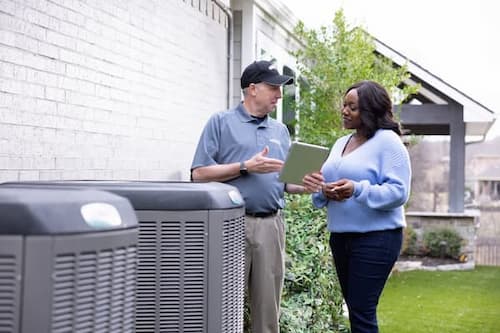
AC Unit being Discussed with Homeowner

Homeowners with aging heating and cooling systems should contact their local HVAC company for information about how to prepare for the 2025 cost increases. An HVAC provider can help create a customized plan to suit each individual’s unique situation. They may offer to replace a system while opportunities to save money are still available, or they can help determine if it is in a homeowner’s best interest to maintain their existing system.

WHY ARE PRICES INCREASING?

The Environmental Protection Agency (EPA) is implementing new regulations in 2025 that will change the way air conditioners are made. The new standards are aimed at making air conditioners more environmentally friendly*, setting the course for a brighter and healthier future for our planet. However, the new technology will come with a rise in price, increasing the cost for a new system by at least 10%.**

WHAT REBATE/TAX CREDIT PROGRAMS ARE AVAILABLE?

Ameren Missouri, a local utility provider, currently has rebates available ranging from $450 to $1,300 to customers who use their services. This program, which has assisted homeowners for over a decade, will not be available in 2025.***

Additionally, the Energy Efficient Home Improvement Credit (25C T ax Credit) can save a homeowner anywhere from $600 to $2,000 when they install a new system.**** The tax credit will still be available in 2025, but the standards for a system to qualify will be higher. ***** This means that a homeowner will need to purchase a higher efficiency system to meet the requirements for the tax credit in 2025. Typically, the cost for a heating and cooling system rises as efficiency increases, meaning a homeowner can expect to pay more for a system that qualifies for the tax credit in 2025.

CONTACT YOUR HVAC PROVIDER TODAY FOR MORE INFORMATION

If you have any questions or would like help considering your options, please contact your preferred heating and cooling company. In the St. Louis area, Level 9 Heating Cooling and Plumbing is knowledgeable, professional, and eager to help you navigate these changes. Our staff is ready to answer questions, or to provide you with a free estimate for replacement.

Contact the Level 9 office today for answers and assistance.

Call Today for Assistance

The Connection Between Thermostats and Energy Efficiency

Energy efficiency is more than just a buzzword – it’s a practical approach to reducing energy bills, minimizing environmental impact, and maintaining a comfortable home. At Level 9 Heating & Cooling, we’ve seen firsthand how a well-calibrated thermostat can make all the difference in your home’s energy usage. For over 40 years, our team has been committed to helping customers optimize their heating and cooling systems for maximum efficiency. Knowing how to use your thermostat properly can make all the difference.

Why Your Thermostat Matters for Energy Efficiency

Thermostats are often the unsung heroes of home energy management. Although it is just a small device on your wall, it plays a pivotal part in maintaining your home’s comfort level throughout the year. A thermostat’s ability to maintain a consistent temperature means that your HVAC system doesn’t have to work harder than needed, which reduces energy waste.

A functioning thermostat can help you set precise temperatures in your home, which is good for residents of Washington because of the hot summers and chilly winters. That means a working thermostat gives you better control which translates into less energy consumption and lower monthly utility bills. At Level 9 Heating & Cooling, we believe that understanding the connection between thermostats and energy efficiency can help homeowners like yourself make smarter choices.

Types of Thermostats and Their Impact on Efficiency

There are different types of thermostats, and each one has a different impact on energy efficiency. Understanding which thermostat does what can help you use them more effectively.

1. Manual Thermostats

Manual thermostats are often considered the least efficient because you must adjust the temperature of your home manually. The best way to improve efficiency is to adjust the temperature regularly to account for fluctuations in temperature throughout the day and night. If you leave your home and forget to adjust the temperature, your system will run unnecessarily and waste energy. Without automatic control, it is up to you to adjust the temperature based on your daily schedule.

Manual thermostats are best for those who have a consistent routine and remember to adjust the temperature when they leave their home or go to bed. However, the energy savings offered by a manual thermostat is often limited compared to more advanced models.

2. Programmable Thermostats

Programmable thermostats are great because they allow you to set a schedule for your HVAC system, automatically adjusting the system when you’re asleep or away. In other words, your system doesn’t have to work as hard to save energy. If it is cold out, it is recommended that you lower the heat a few degrees while you are at work, which can make a difference on your monthly energy bill.

Most programmable thermostats come with different settings for weekdays and weekends, as well as multiple times throughout the day. Flexibility like that allows you to optimize your heating and cooling to match your lifestyle. For instance, you can program the heat to come on shortly before you wake up in the morning so your home is warm and cozy when you get out of bed. Since you don’t have to leave the heat on high all night, your utility bills will be lower.

3. Smart Thermostats

Smart thermostats take energy efficiency to a whole new level. A smart thermostat can learn your preferences and adjust settings automatically for optimal performance. You can control many smart thermostats remotely through your smartphone, which allows you to make adjustments even when you’re not home. They can also provide insights into your energy usage, helping you identify patterns so you can find new ways to save.

At Level 9 Heating & Cooling, we recommend smart thermostats to our clients in Washington because of their ability to adapt to changing needs. We also like that they maximize energy savings throughout the year. Features like geofencing, which adjusts the temperature based on whether you’re at home or work can further enhance savings.

How to Use Your Thermostat for Maximum Energy Savings

Getting the most out of your thermostat doesn’t have to be complicated. In fact, there are just a few simple steps you can take to improve your energy savings. Knowing what those steps are can assist you in saving money each month.

Set Reasonable Temperature Goals

There is no reason to keep your home at a comfortable temperature if you aren’t home. Although it is nice to walk into a comfortable home, leaving your heat or air conditioner on when you’re not home is nothing more than wasted energy. To help you maintain reasonable temperatures, consider the installation of a programmable or smart thermostat.

Avoid Constant Adjustments

Frequently adjusting your thermostat can cause your HVAC system to work harder, using more energy. Instead, come up with a schedule that works best based on when you’re home and when you’re away. Adjust your temperature accordingly. Adjusting your temperature frequently throughout the day causes the system to kick on and off, which can translate into expensive utility bills.

Take Advantage of Zoning Systems

If your home has different zones, consider setting varying temperatures for each area based on how they are used. For example, you might maintain the comfort level of a living room during the day and a bedroom at night. There is no reason to heat and cool rooms that are not in use at certain times of the day.

Install Your Thermostat in the Right Spot

The placement of your thermostat can make all the difference. If you place a thermostat near doors, windows, or vents, it can give inaccurate temperature readings. Inaccuracies in temperature cause the system to cycle on and off when it is not necessary, which overworks the system. Make sure you do not place the thermostat in direct sunlight as that could also create inaccurate readings. Instead, place the thermostat in a central location within your home.

Benefits of a Well-Maintained Thermostat

Maintaining your thermostat is just as important as knowing how to use it. A well-maintained thermostat can contribute to the overall health and efficiency of your HVAC system. Understanding the benefits will help you understand why investing in professional maintenance is so important.

Extended HVAC Lifespan

An overworked HVAC system will not last as long as it should. By maintaining consistent temperatures, preventing excessive energy drain, and minimizing the on-and-off cycle of your system, you can prolong the life of your unit.

Enhanced Levels of Comfort

With an optimized thermostat in place, you can maintain steady temperatures throughout your home, which enhances your comfort. Consistency is especially important when temperatures reach extreme highs or lows. If the thermostat is not maintained, it will struggle to keep up with temperature changes, causing you unnecessary discomfort.

Reduced Environmental Impact

Energy-efficient thermostats help you reduce your carbon footprint by using far less energy. Smart thermostats often offer the best environmental impact and even allow you to see the effect of your energy settings. If you wish to invest in environmental values, consider installing a smart thermostat and keeping it maintained.

Contact Our Professionals Today

If you need thermostat repair, replacement, or AC maintenance, make sure you invest in professional service. Our team of experts can help you with your thermostat needs in Washington, MO. Give us a call today to find out more about our air conditioning services, indoor air quality services, and more.

Does Your Home’s HVAC System Impact Its Value?

It may seem obvious that your Des Peres, MO home’s HVAC system would influence your property’s resale value. However, you’ll find plenty of conflicting information online on the subject. Some claim that installing a new HVAC system has virtually no impact on your home’s value. Others promise pie-in-the-sky returns that defy logic. Here’s a roundup of the available data to clarify the relationship between HVAC systems and home values.

The Risks of Selling a Home With an Old HVAC

Before diving into how a new HVAC installation affects home values, it’s worth discussing the alternative. If you try to sell your home with an aging HVAC system, you should know some things. One is that any HVAC over 10 years old will receive extra scrutiny from a home inspector. So, it’s a good idea to disclose your HVAC age and condition in your home’s initial listing. It would also help if you could provide detailed maintenance records for your HVAC. If you’ve taken good care of the system with regular HVAC maintenance, it could assuage the fears of a potential buyer.

However, simply having an old HVAC might dissuade some prospective buyers from making offers on your home. That can be especially true if other comparable available properties have newer HVAC systems. All other things being equal, your home’s old HVAC might doom it to a lengthy stay on the market. If you’re hoping for a quick sale, installing a new furnace and air conditioner might be prudent, regardless of cost.

You should also be aware that an old HVAC system might lead to a potential buyer asking for concessions in a sale. There are generally two ways buyers request HVAC-related concessions. They’ll either ask you to replace the system before the sale’s completion or deduct the replacement cost. You may be able to negotiate splitting the cost of installing a new HVAC. However, that could complicate your sale and cause an interested buyer to pass on your property.

The only caveat is if your home has a high-efficiency HVAC system. Such systems retain their value longer than less efficient models. Therefore, a potential buyer might overlook your system’s age because of its projected energy savings.

The ROI of Installing a New HVAC

Most experts claim that you’ll recoup about 30% of the cost of a new HVAC system when you sell your home. However, it’s important to remember the previously mentioned 10-year threshold. The closer you get to that age, the more value you’ll have gotten from your HVAC before selling. That can make a 30% return on investment (ROI) more palatable.

Maximizing the Financial Impact of a New HVAC

You can maximize the positive price impact of a new HVAC in some ways. Here’s how.

Prioritize Quality and Efficiency

If you plan to install a new HVAC before selling your home, you should prioritize two things. First, you should choose a system built by a reputable manufacturer. Keep in mind that potential home buyers will likely not be HVAC experts. However, they will probably recognize common HVAC brand names. By choosing a system from a well-known manufacturer, you’ll reassure potential homebuyers of the system’s quality. A well-built system will also likely come with a more comprehensive warranty, improving its value.

The second thing to prioritize is the efficiency of the HVAC system you install. If you choose a conventional HVAC system, pick one with the highest SEER (Seasonal Energy Efficiency Ratio) and AFUE (Annual Fuel Utilization Efficiency) ratings you can afford. You can even use that information in your home’s listing when the time comes.

Choose an Attractive System Type

Choosing an attractive system type can be an even more effective way to maximize the ROI of a new HVAC system. One excellent option would be to install a heat pump. A study by the Center for Global Sustainability found that installing a heat pump adds between $10,400 and $17,000 in value to a home. The reason is that homebuyers now prioritize energy efficiency and minimal environmental impact. The price premium a heat pump fetches should exceed the average 30% HVAC ROI, depending on installation cost.

If you want a system that will raise your home’s value even more, consider putting in a geothermal HVAC system. Geothermal systems boast a variety of advantages that make them even more attractive to homebuyers. For one, they’re the most efficient type of HVAC system you can buy. For another, they last far longer than most other options. The indoor components of a geothermal HVAC can last for 25 years. The underground refrigerant loops can last up to 50!

So, any homebuyer would know they’ll save a small fortune by purchasing a home with geothermal HVAC. As a result, studies show that homes with such systems sell for an average premium of $28,840 more. Keep in mind, however, that geothermal systems are costly. So, you should only consider installing one if you’re not planning to sell your home for at least a decade. Otherwise, your ROI might be worse than installing a conventional HVAC.

Take Advantage of Incentives

Finally, you can maximize the financial benefit of installing a new HVAC by taking advantage of available incentives. If you choose an especially efficient HVAC system, it will be eligible for various rebates and incentives. Heat pumps, for example, qualify for a tax credit worth up to 30% of their total cost, up to $2,000. By mid-2025, heat pumps will also be eligible for an income-based rebate program. That program will provide point-of-sale rebates of up to $8,000 on qualified heat pump systems.

If you choose a geothermal HVAC, you could save even more. They qualify for the same 30% tax credit as an air source heat pump. The difference is that there’s no maximum cap on the tax credit value. As a result, you can claim the full 30% of your installation costs, no matter what dollar amount it is. You can even carry the tax credit forward over multiple years. That guarantees you won’t lose the credit if it exceeds your single-year tax liability. Some local energy companies also offer rebate programs on geothermal HVAC systems.

Your HVAC Replacement Specialist

If you’re considering an HVAC replacement in Des Peres, count on Level 9 Heating & Cooling to help. We’ve served local homeowners for 62 years. Our longevity means we understand the economics of HVAC systems in this area in ways other companies can’t. We specialize in various HVAC options, making us the perfect partner for your replacement project. We install quality conventional HVAC systems and heat pumps from leading manufacturers like Carrier.

Plus, we offer geothermal HVAC systems, should you want the most efficient solution. We also provide free estimates so you won’t be blindsided by surprise costs. We can also provide financing options on approved credit to help you pay for a new HVAC solution. Additionally, we’re Better Business Bureau accredited and have an A+ rating.

So, when the time comes for a new HVAC in Des Peres, call Level 9 Heating & Cooling immediately!

The Long-Term Savings of Geothermal Systems

Commonly used in the areas of Washington and St. Louis, MO, geothermal energy can be an efficient and eco-friendly way to keep your home comfortable. Rather than generating hot air using a furnace or cool air by way of an air conditioner, heat pumps utilize heat from the earth to keep your home comfortable. Depending on the specific model of equipment that you choose, you can use geothermal energy for heat as well as air conditioning. While the initial investment of a geothermal system may seem substantial, the long-term savings make this an ideal consideration.

The Basics of Geothermal Heating and Cooling Systems

A heat pump, along with a series of underground pipes, will allow for an exchange of heat within the earth. If you’re using your heat pump for heat, heat is extracted from the earth so it can be used to warm your home. If you have a system that switches its function to cooling for the summer, heat is removed from your home and then released back into the earth. You can expect the installation of a geothermal system to be slightly more expensive than a traditional furnace or air conditioning system installation. However, the system will save you significant energy and money in the long run.

How Much Can You Save?

The earth has a stable temperature of 59 degrees Fahrenheit, allowing geothermal heating and cooling systems to keep your home at your desired set temperature. A typical furnace or air conditioner can be energy-intensive and expensive to operate, especially during extreme weather conditions. Geothermal energy doesn’t use as much energy, making it affordable and efficient. According to the Environmental Protection Agency, you can save as much as 50% on your air conditioning costs and 70% on your heating expenses throughout the year with this investment.

Saving Money on Maintenance and Repairs

Once you have installed your heat pump, you will not need to worry about extensive ongoing maintenance or repairs. Traditional HVAC systems are far more likely to have intense maintenance needs and serious breakdowns. A lot can go wrong with them. During the lifespan of your geothermal heat pump, you will likely need minimal repairs, saving you money on emergency service calls. The pump typically lasts about 20 years, but some parts, including the ground loops, can last more than a century with good care.

Not Worrying About Shifting Costs

You may find that your monthly utility bills go up frequently according to the current state of the economy and soaring energy prices. Because a geothermal system relies on the stable temperature of the earth, you won’t see a lot of change. Not only does this save you money on your monthly utility bills but also allows you to plan your budget accordingly. You know what to expect each month.

Rebates and Incentives

Many scenarios make it easy to take advantage of manufacturer rebates or tax incentives when you invest in a geothermal heat pump through Level 9 Heating & Cooling. Many local agencies and HVAC manufacturers strive to promote geothermal energy and heat pumps because they are such an efficient option for home comfort. We can let you know if specific models come with a current incentive or rebate and guide you to the most cost-effective option for your needs. We’ll also let you know about any government promotions that can save you money on your taxes if you invest in a heat pump for your home.

Avoiding Extreme Home Energy Needs

The weather in our area can fluctuate quite a bit throughout the year. When the temperature outside is extremely hot or cold, your HVAC system must work overtime to keep your home comfortable and safe. Unfortunately, this can cause a furnace or air conditioner to become overworked. This is an expensive scenario. You can avoid extreme utility bill spikes by relying on geothermal energy. Consistent performance is a key benefit of this system. Many of our clients are shocked at how much more comfortable their homes are with a geothermal system.

Increasing Your Property Value

If you will be selling your home at some point, a geothermal heat pump can be a major selling point that increases the overall value of your property. Many home buyers are swayed by energy-efficient home upgrades that don’t necessarily come with every listing. If you plan to sell within the next year or so, you might not want to invest in a heat pump right now. However, living in your home for several years before selling will allow you to reap the efficiency benefits of geothermal energy while also boosting the sale price of your home when it comes time to list it.

The Other Benefits of a Geothermal System

There are several other benefits associated with investing in a geothermal system. Because many heat pump systems are compact, they’re perfect for homes with minimal space for HVAC equipment. These systems are also very safe with no risk of carbon monoxide poisoning. They allow you to easily maintain healthy indoor air quality throughout the year. Many homeowners find that their geothermal systems provide consistent comfort throughout their home whereas their previous furnace or air conditioning unit created unpleasant hot or cold spots.

Considering Backup Heating or Cooling

If you’re concerned about geothermal energy being unable to heat or cool your home when temperatures are extremely high or low, backup equipment might be one option. Many homeowners choose geothermal energy for their primary heat or cooling source but use a backup furnace and air conditioner during extreme weather events. If you don’t yet have a furnace or air conditioner, you may end up paying more upfront for your geothermal installation. Otherwise, you can use your existing central air and furnace systems for backup cooling and heating and add your heat pump as a primary source of comfort. We’ll work with you to figure out the best setup for your home that keeps you and your family comfortable. We’ll also take into account your budget, ensuring that you’re going to reap the long-term benefits of this investment.

If you are interested in learning more about a geothermal system for your home’s heating and cooling needs, reach out to our team here at Level 9 Heating & Cooling. We would be happy to answer any questions that you have. We can take care of the installation of your geothermal equipment, as well as provide ongoing maintenance and repairs as needed. We also install, repair, and maintain traditional furnaces and air conditioners. We offer drain cleaning and repair, leak detection, and water heater services and can perform an indoor air quality assessment and recommend air purification improvements to better the comfort and safety of your home. This includes whole-house purifiers, upgraded ventilation, and much more. Contact Level 9 Heating & Cooling today to schedule an appointment.

The Top Benefits of Variable-Speed Heat Pumps

If you’re looking to upgrade your home’s heating and air conditioning, a variable-speed heat pump can be one of the best options. Variable-speed heat pump systems provide many benefits over standard HVAC systems in terms of energy efficiency and comfort. In this article, we’ll explain how variable-speed heat pumps work and show you the benefits this type of unit can provide to your home.

1. Highly Efficient Cooling and Heating

The first thing you should understand about heat pumps is that they provide both heating and air conditioning and are the most efficient heating option available. Compared to furnaces and other types of electric heat, heat pumps tend to use far less energy. Heat pumps work by transferring heat instead of generating it.

Even when it’s cold outside, the air does have some heat. While heat pumps used to be recommended primarily in southern areas, technological improvements mean they are a viable option further north. We often recommend an auxiliary heat source for the coldest times in our climate. Nonetheless, a heat pump will still generally be the least expensive heating option. However, a geothermal heat pump is usually sufficient to heat your home even during an extreme cold snap.

While all heat pumps are quite efficient when cooling and heating, variable-speed heat pumps are far more efficient than standard single-stage heat pumps. A single-stage heat pump has two settings: on or off. It always runs at full speed. This means they are turning on and off repeatedly throughout the day. This start-up process uses the most energy and puts the most stress on the system.

Variable-speed heat pumps, on the other hand, can vary the speed of the blower. They are designed to run continuously at a lower speed, which still uses less energy than a single-speed heat pump. This type of heat pump can use anywhere from 25-50% less electricity than a standard single-speed blower.

2. Consistent Temperature Control

Because variable-speed heat pumps are meant to run continuously during the hottest and coldest times of the year, they can also retain a more consistent temperature. One of the biggest issues with single-stage units is that they run so quickly that they turn on and off multiple times per hour. This leads to the temperature inside the house quickly increasing or decreasing not long after the heat pump shuts down. A similar issue is that single-stage units may not always run long enough to fully heat or cool every part of the home. This is why you’ll often have cold or hot spots in certain parts of the home.

By continually adjusting the speed at which they run based on the current temperature and how much heating or cooling is required, a variable-speed heat pump keeps the temperature almost exactly where you want it. That means your home will typically never be more than 1-2 degrees warmer or cooler than what you have your thermostat set to. Running continually at a slower speed also enables the heat pump to evenly distribute the hot or cold air more effectively. That means you won’t have to deal with rooms that consistently stay warmer or colder than you want.

3. Better Humidity Control

The summers in the St. Louis area tend to be extremely humid and muggy. This creates issues in terms of indoor comfort since the more humid the air in your home is, the hotter you’ll feel. All air conditioners and heat pumps help with humidity control as they condense moisture from the air. The issue is that single-stage units often aren’t effective enough to manage humidity issues on their own, which is why many homes in humid climates also need a whole-house dehumidifier.

Single-stage units don’t always provide effective enough humidity control because they typically never run for more than 15 to 20 minutes at a time. That means they can’t remove all that moisture inside the home before they shut off. This is another area where variable-speed heat pumps have a significant advantage. Even when the system runs at the lowest speed possible, quite a bit of moisture will continually condense on the system’s evaporator coil. The fact that the system runs constantly means it continually pulls lots of moisture out of the air, making the entire home feel drier and far more comfortable.

One major issue with high indoor humidity is that it often leads people to turn the temperature on their thermostat down even further to feel more comfortable. The fact that a variable-speed heat pump can keep your home from ever being too humid will make it feel cooler and more comfortable. As such, you can set your thermostat a few degrees higher to save on energy without negatively impacting your comfort level.

4. Long Life Expectancy

One drawback to heat pumps is that they usually don’t last quite as long as other HVAC units. This is because they get far more use since they work to heat and cool instead of only providing heating or cooling as other units do. The average life expectancy of a single-stage heat pump is around 10 to 12 years. Some units may not last that long, especially if they’re not properly maintained. This is yet another area where variable-speed heat pumps have an advantage.

A single-stage heat pump is under huge strain as it turns on and powers up its motors. This type of unit will usually have to turn on two to three times per hour, which leads to a lot of wear and tear that can shorten its lifespan. One way to think about this is like driving a car. When a single-stage unit turns on, it’s like going from zero to 100 miles an hour as fast as possible and pushing the car’s engine to the limit.

A variable-speed unit always starts out at a lower speed. It then slowly increases its speed as necessary, which reduces the strain and limits the wear and tear on its motors. There is also much less overall strain on a variable-speed heat pump when it isn’t running at its highest speed. This reduced strain is the main reason you can usually expect a variable-speed heat pump to last a few years longer than a standard unit.

5. Incredibly Quiet Operation

One last benefit of variable-speed heat pumps is that they run extremely quietly. A variable-speed unit will be just as noisy as a single-stage unit when it runs at full speed. Nonetheless, it will produce very little noise the majority of the time since it will mostly run at lower speeds. The fact that the heat pump sits outside means you usually won’t hear much or any noise from inside your house.

Since 1975, Level 9 Heating & Cooling has been helping residents in Washington, MO and the greater St. Louis area with their air conditioning, heating, and plumbing needs. We specialize in all types of cooling and heating system installation, maintenance, and repair, as well as indoor air quality solutions. We also offer plumbing services. For more information on the benefits you can enjoy by installing a variable-speed heat pump or to schedule a consultation, contact Level 9 Heating & Cooling today.

Why Ductless Mini Splits Are Ideal For Room Additions

If you’re considering a room addition to your Des Peres, MO home, you’ll need to decide how to keep it comfortable. It’s not as easy a decision as you might think. In many cases, it’s impractical to extend your home’s existing ductwork to cover an addition. Doing so can exceed your HVAC’s capacity and harm its efficiency and your comfort. As an alternative, you could install a window air conditioner, but that won’t provide heat. Your best option might just be to install a ductless mini-split to handle your new room’s heating and cooling needs. Here is everything you need to know about them and why they’re perfect for room additions.

What Is a Ductless Mini-Split?

As their name suggests, ductless mini-splits are HVAC systems that don’t require ductwork. Instead, they rely on an outdoor unit and a wall-mounted indoor air handler. Mini-splits typically use heat pump technology to offer both heating and cooling from a single convenient unit. This also makes them incredibly efficient. In most cases, a ductless mini-split will even outperform your home’s existing HVAC system. Mini-splits are also quite easy to install. All they require is a little bit of space and a small hole in your new room’s wall to permit the necessary connections.

How Do Ductless Mini-Splits Work?

Ductless mini-splits rely on heat pump technology to function. That means they use a refrigerant to collect and move heat either from the indoors to the outdoors or vice versa. In the summer, a mini-split works just like the air conditioners you’re probably used to. It begins by making its refrigerant cold by passing it through an expansion valve that lowers its pressure. In that state, the refrigerant is capable of absorbing heat from the air, which it does inside the indoor unit. To do that, it passes through a set of coils while a fan blows warm indoor air through them. The refrigerant absorbs heat until it boils and turns into a warm gas. Then, it’s ready to carry the heat outside for removal.

The heat removal happens in the mini-split’s outdoor unit, where a compressor raises its pressure and temperature. After passing through the compressor, the refrigerant will be at least 110 degrees Fahrenheit. At that temperature, it is hotter than the outdoor air. This allows the refrigerant to cool by releasing its heat into the surrounding environment. The large fan in the outdoor unit helps by pushing air over another set of coils that the refrigerant travels through. As it does, it condenses back to a warm liquid. The process repeats for as long as you need cooling.

In the winter, this same process reverses to provide heat for your new room. Unlike conventional heating equipment, however, a heat pump mini-split doesn’t consume energy to create heat. Instead, it relies on already-existing heat energy from the outside air. The process works because of some interesting scientific principles. One is that heat energy naturally transfers from warm substances to cold ones. The other is that manipulating the pressure of a refrigerant can alter its temperature and boiling point.

As a result, a heat pump mini-split can gather sufficient heat from the outdoor air, even on cold days. This works just as long as the system’s refrigerant is capable of getting colder than the outdoor temperature. Today, you can find heat pump mini-splits that use refrigerants that get as cold as -15 degrees Fahrenheit. So, they’re more than capable of providing ample heat here in Des Peres.

Why Ductless Mini Splits Are Perfect for Room Additions

There are multiple reasons why ductless mini-splits make the perfect heating and cooling solution for room additions. The following are the most important among them.

High Energy Efficiency

One of the most important reasons that ductless mini-splits make a perfect choice for room additions is their efficiency. With an average SEER rating of 22, ductless mini-splits rank among the most efficient cooling options on the market. Plus, mini-splits can provide four units of heat for every unit of electricity they use. There is no other heating technology available today that can beat that unless you install a geothermal HVAC system. This guarantees that you’ll have a comfortable new room without major new energy costs.

Ease of Installation

Mini-splits also make a perfect fit in room additions because they’re easy to install. With a mini-split, you don’t have to worry about HVAC installation during the construction of your room. It’s easy to add a mini-split to your room once it’s complete without making any substantial modifications. All you need is space on a wall to mount the air handler and a small hole through that wall. Plus, a ductless mini-split uses its own power circuit, so it won’t affect any of the outlets in your new room.

Zoned Heating and Cooling

Using a ductless mini-split to keep your new room comfortable also lets you control its temperature independently. This means you can make your new room warmer or cooler than the rest of your home as you see fit. A mini-split has its own thermostat and controls, so you can even turn it off when nobody’s using the room.

Available Efficiency Rebates and Credits

Choosing a ductless mini-split for your room addition could also unlock a variety of rebates and tax credits. Local energy providers offer a variety of rebates to encourage homeowners to choose efficient HVAC solutions. Plus, the federal government offers tax credits for the same reason. And soon, many ductless mini-splits will become eligible for point-of-purchase rebates, too. Between them all, a ductless mini-split can be your cheapest option for keeping your new room comfortable.

Quiet Operation

Mini-splits are also perfect for room additions because they operate very quietly. They won’t be as disturbing as window air conditioners, and many are quieter than ducted solutions. Plus, their outdoor units are typically smaller and quieter than those of central HVAC systems. This makes them ideal if you plan to use your new room as an office or as a space for quiet relaxation.

Reduced Maintenance Requirements

Ductless mini-splits also need less maintenance than comparable ducted solutions. They have washable air filters that are easy to remove and clean. You can also keep their air handlers fairly clean on your own, reducing the need for professional maintenance visits. That helps further minimize a mini-split’s ongoing operational costs.

Built-in Remote Control

Ductless mini-splits also come with built-in remote controls. This makes them easy to control from inside your new room. Plus, some models feature Wi-Fi connectivity, allowing you to operate them remotely using an app. That can be great if you want the ability to turn your mini-split on and off while you’re out.

Your Ductless Mini-Split Specialists

Since 1975, Level 9 Heating & Cooling has been the go-to HVAC company that Des Peres homeowners and business owners trust. We offer complete HVAC installation, repair, and maintenance services, which include working with the latest ductless mini-splits. We also offer drain cleaning, water heater, and leak detection services. We’re also quite proud of being a Better Business Bureau-accredited business with an A+ rating. That guarantees that you can count on quality services at fair prices from us. So, if you need a ductless mini-split for your new room addition in Des Peres, contact Level 9 Heating & Cooling today!

Is Geothermal Cooling Worth The Investment

In the quest for sustainable and efficient home cooling methods, geothermal energy has recently gained attention as an alternative to traditional air conditioning systems. Geothermal cooling taps into the Earth’s natural energy to regulate your home’s temperature. However, before you invest in geothermal cooling, here is what you need to know.

Understanding Geothermal Cooling

Geothermal cooling, also known as a ground source heat pump, uses the Earth’s constant temperature to transfer heat. It operates on the same principle as geothermal heating but flips the mechanism to expel heat from the home into the relatively cooler Earth.

How It Works

The Earth’s temperature just a few feet below the surface remains relatively constant (ranges from around 45 to 75 degrees Fahrenheit) throughout the year, regardless of the season. Geothermal cooling systems harness this stable temperature by exchanging heat with the Earth through underground pipes. The parts that play a pivotal role in this process include the heat exchange loop, ground source heat pump (GSHP), and air distribution system.

The heat exchange loop is filled with a water-antifreeze solution that runs underground, absorbing heat from the surrounding environment. The solution circulates through a ground-source heat pump (GSHP) located inside your home. The GSHP contains a compressor, condenser, and evaporator. As the water-antifreeze solution passes through the GSHP, it transfers its heat to the refrigerant in the system.

The refrigerant then gets compressed, which causes it to become warm and move into the condenser, where it releases its heat into the home’s air distribution system. Finally, the cooled air is distributed throughout the house via a fan and ductwork while the refrigerant returns to its liquid state and repeats the process.

Variations in Geothermal Systems

What are the variations in geothermal systems, you might ask.

Horizontal Loop System

A horizontal loop system involves burying pipes horizontally just below the ground’s surface. It’s a common choice for areas with plenty of land space.

Vertical Loop System

This system is ideal for properties with limited space for horizontal trenches. Vertical loops involve drilling one or more boreholes deep underground, typically hundreds of feet deep. Pipes are inserted into the boreholes, and the space between the pipes and the borehole walls is filled with grout material to enhance heat transfer.

Open Loop System

Open loop systems utilize groundwater or surface water sources like wells or lakes as the heat exchange medium. The water is circulated through the GSHP to extract heat and then returned to the ground source after cooling. It’s ideal for areas with readily available and sustainable sources of water and where ground conditions are favorable for water circulation.

Benefits of Geothermal Cooling

What are the benefits of geothermal cooling?

Energy Efficiency

Unlike traditional AC units that battle the rising outdoor temperature by using electricity to produce cool air, geothermal systems don’t need to generate coolness from scratch. They act as heat exchangers, utilizing the Earth’s constant underground temperature, which is typically cooler than the surrounding air during summer months. In simpler terms, the Earth acts as a giant pre-cooling system, reducing the workload for the ground source heat pump and minimizing energy consumption.

Reduced Carbon Footprint

The cornerstone of geothermal cooling’s environmental friendliness is its reliance on renewable energy. Geothermal systems tap into the Earth’s constant underground temperature, a naturally occurring and continuously replenished source of thermal energy. This eliminates the need for significant electricity consumption to achieve cooling, reducing dependence on fossil fuels and their associated greenhouse gas emissions.

Consistent Comfort

The Earth’s surface maintains a relatively stable temperature year-round, and this is reflected in geothermal cooling systems. Due to its use of the Earth’s heat exchange method, the system can maintain a consistent temperature within your home or building regardless of outdoor climate fluctuations. This results in improved indoor air quality and comfort for occupants.

Quiet Operation

Geothermal cooling systems operate silently compared to traditional air conditioning units with noisy outdoor condensers. This is because the majority of the system’s components are housed underground, minimizing noise pollution and making them ideal for residential areas or noise-sensitive environments such as schools or healthcare facilities.

Durability and Low Maintenance

Geothermal cooling systems have fewer moving parts than traditional AC units, resulting in less wear and tear and a longer lifespan. The indoor components are also sheltered from harsh outdoor elements, further increasing their durability. This translates to lower maintenance costs and less frequent replacements. With proper maintenance, your system can last up to 50 years.

Versatility

While most commonly used for cooling, geothermal systems can also provide heating during colder months by reversing the heat exchange process. Moreover, the underground piping can also be used to preheat water for domestic use, further reducing energy consumption and utility costs.

Potential Tax Credits

Due to their environmental benefits, geothermal cooling systems may qualify for tax credits, reducing the upfront cost and making them a more attractive investment. For example, under the Inflation Reduction Act of 2022, the federal government has extended tax incentives for homeowners looking to install renewable energy systems like geothermal heat pumps.

What to Consider Before You Invest in Geothermal Cooling

Does it make sense for you to buy a geothermal cooling system?

Upfront Costs

The initial expense of a geothermal cooling system can be significantly higher than a traditional air conditioning unit. Costs include the heat pump itself, the heat exchanger, and the labor to install the system. However, long-term energy savings and potential tax incentives offset these costs.

Property Suitability

Not all properties are ideal for geothermal systems. Taking your soil type, for instance, they each have varying thermal conductivity. Sand soils have higher conductivity, so they are able to transfer heat more efficiently. Clay soils, on the other hand, have lower conductivity and may require more underground piping.

As mentioned earlier, space can also influence the size and layout of the system. Limited space can necessitate a vertical loop system, which involves drilling hundreds of feet deep boreholes. This can add to the upfront costs.

Maintenance Requirements

Regular maintenance is necessary for geothermal cooling systems to continue operating efficiently. This includes checking and replacing filters, inspecting the piping system, and monitoring fluid levels. While these maintenance tasks may seem daunting, they are less frequent than traditional HVAC systems.

Installation Expertise

Choosing the right company to install your geothermal system is crucial. Level 9 Heating & Cooling has certified and experienced installers who can manage the complex process from start to finish. We serve Washington, St. Louis, MO, and surrounding areas.

Geothermal Cooling and Building Codes

You can’t just install a geothermal system without considering local building codes and regulations. You must consult with your local authority to know the permits and requirements you must comply with before installing a geothermal system.

In addition to building codes, it is important to consider any potential zoning restrictions that may impact the installation of a geothermal system. Some areas may have specific regulations on drilling or the location of underground piping. Our experts at Level 9 Heating & Cooling will help you with this process to ensure your system is installed in compliance with all regulations.

Is Geothermal Cooling Worth the Investment?

We also offer AC, heating, plumbing, and indoor air quality services. Additionally, we offer commercial HVAC services and 24/7 emergency repair services. Call Level 9 Heating & Cooling today if you’re considering geothermal cooling, and we can install, repair, or maintain your new or current system.

The Science Behind UV Air Purifiers

Due to efforts by organizations like the EPA, there is heightened awareness about the dangers of poor indoor air quality. An IAQ truism is that the air inside your home can be no cleaner than the air outside without air purification. The sealed nature of modern homes coupled with powerful HVAC systems often results in much higher pollution levels. The good news is that there are several advanced technologies available to homeowners to clean their air. Among those options are UV air purification systems, which come in a wide range of configurations.

Ultraviolet Light

Ultraviolet light or UV is a type of electromagnetic radiation. It exists higher in the EMR range than visible light but lower than X-rays. UV also constitutes about 10% of the total EMR output of the Sun. Humans can create UV through specialized lights, such as blacklights, tanning lamps and mercury-vapor lamps. Short-wave UV sterilizes surfaces but also damages DNA. This is why people should protect their skin from exposure to the sun with sunscreen.

UV is made up of three core components. The aforementioned short-wave component is Ultraviolet C or UV-C. Ultraviolet B is the medium wave and what is known as intermediate UV or Dorno radiation. Ultraviolet A is the long wave and what is known as blacklight or soft UV.

Understanding UV-C

UV is an ionizing radiation at shorter wavelengths. This means that it has enough energy to detach electrons from atoms and even molecules and thus ionize them. UV-C is therefore germicidal. It can kill or inactivate microorganisms. What is notable is that natural sunlight is virtually devoid of UV-C due to the absorptive nature of the ozone layer. The UV that man can create, however, is abundant with UV-C that we can apply purposefully. One way we apply it is ultraviolet germicidal irradiation. Medical and food processing facilities, for instance, have long used UVGI to inactivate pathogens, bacteria and more.

What UV-C Destroys

UV-C destroys pathogens, which are any organism or agent that can result in disease. Pathogens are commonly referred to as germs. UV-C can also inactivate many viruses and bacteria. Multiple recent research studies have shown that UV-C can inactivate the coronavirus strain that causes COVID-19. UV-C also kills funguses and mold spores. While it does not kill dust mites directly, it does inactivate dust mite eggs. That can make a significant difference in limiting a dust mite population in a living space. It’s important to note that UV-C does nothing to particulate matter. PM is a core aspect of air pollution and is linked to a host of cardiovascular and respiratory diseases.

How UV Air Purifiers Work

UV air purifiers apply the germicidal properties of UV-C light to sterilize air as it passes through the system. Often, these devices have a UV lamp contained within them. As air circulates through, the lamp emits ultraviolet radiation and cleans the air. The DNA of microorganisms like bacteria is disrupted. The microorganisms become inert and are no longer able to reproduce. Nothing is filtered. The deactivated microorganisms remain in the air but can be filtered through other means.

Can Organisms Reactivate?

Yes. Some organisms, including some viruses, can reactivate or “wake up.” Inactivated microorganisms are not harmful. Reactivated microorganisms can be. The typical UV light wavelength used in UV air purifiers sold for residential purposes is 0.254 microns. This is good enough for the average household. Reactivation of viruses won’t be a great concern. But to avoid any reactivation altogether, you can look for a UV air purifier with a spectrum ranging up to 0.315 microns.

Fundamental Types of UV Air Purifiers

There are two core types of UV air purifiers: coil and air sterilization. Air sterilization is as discussed earlier. Microorganisms are affected by the light as they pass through. In a coil sterilization system, air passes over coils as it makes its way through an HVAC system. The UV-C light sterilizes the surface of those coils. An advantage to this approach is that it helps keep the HVAC system clean and curbs microbial growth in the ductwork.

Effectiveness of UV Air Purifiers

The efficacy of UV air purification depends on several factors. The factors for homeowners to consider are the intensity of the UV light, exposure duration and airflow rate. Regarding airflow, purifiers are often rated by cubic feet per minute or CFM and/or air changes per hour or ACM.

You must choose a unit with UV lamps strong enough to achieve your air purification goals. It is also important that you choose a system that cleans enough air. It should be relative to the size of your home but also the number of residents and pets. Properly sized, UV purifiers are very effective at reducing the concentration levels of airborne pathogens.

Considerations and Safety Precautions

UV air purifiers need to be sized and installed appropriately to ensure effectiveness. It is rarely a do-it-yourself job and generally requires a professional HVAC technician. All air purifiers require regular maintenance and cleaning. Failure to clean a UV air purifier regularly will diminish its effectiveness. UV-C radiation can be harmful to your eyes and skin. Air purifiers are designed to prevent leakage of any UV-C light. But you often have to open them to clean and maintain them. This is another reason that only a professional should install, service and clean your UV air purifier.

Types of UV Air Purification Systems

UV lamps are a common example of standalone UV air purification that can be integrated directly into your HVAC system. Since UV-C only provides one useful type of air purification, many manufacturers sell units with multiple stages. The common air purifier on the market has four stages: prefilter, HEPA, activated carbon and UV-C. The prefilter blocks large particulate matter from clogging the HEPA filter. The high-efficiency particulate air filter traps most particulates down to 0.3 microns in size. The activated carbon stage neutralizes odors, gases, volatile organic compounds and so forth.

Portable vs. Whole-Home Systems

UV air purifiers are available in both portable and fixed configurations. Portable units tend to be smaller and cheaper. They’re effective for use in your personal space. Larger portable units can provide coverage for 1,000 square feet or more. If you want coverage for your entire home, a whole-home system will be necessary. These systems generally integrate with the HVAC. This allows you to take advantage of the air handler you already have. It also provides the added benefit of keeping your HVAC system clean.

UV Air Purifiers in Washington and St. Louis

If you’re interested in having a UV purification system installed, Level 9 Heating & Cooling can help. We have 50 years of experience serving Washington, St. Louis and the surrounding areas of Missouri. Our team installs all manner of air purifiers, dehumidifiers and humidifiers. We also install, maintain and repair all types of heating and cooling systems. Our plumbers clean and repair drains, find and fix leaks and install both tank and tankless water heaters. Call us today or contact us online to schedule an appointment or with any questions about the products and services we provide.

Book Online

"*" indicates required fields

This field is for validation purposes and should be left unchanged.